
“Some milestones are measured in numbers. Others are measured in lives transformed.” Emmanuel Tanti, Programme Manager
In the remote hills of Arunachal Pradesh, losing sight has often meant losing much more than vision.
For many older adults, blurred vision gradually becomes darkness. Reading prayers becomes impossible. Walking independently becomes difficult. Farming, weaving, cooking, and caring for grandchildren become daily struggles. Families quietly adapt, believing blindness is simply a part of growing old.
But blindness caused by cataract is not inevitable. It is treatable.
The challenge is ensuring that every person who needs care is identified, reaches treatment in time, and receives the support to regain their sight.
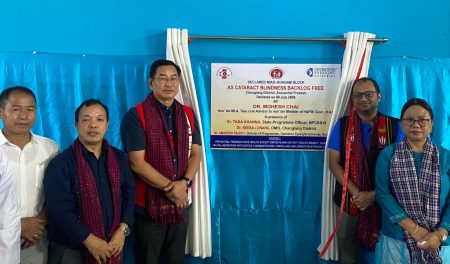
That challenge has now been met in Miao Block of Changlang District, Arunachal Pradesh, officially declared Cataract Blindness Backlog-Free (CBBF) in June 2026. For Operation Eyesight, this achievement proves that when communities, governments and technical partners work together, eliminating avoidable blindness becomes an achievable reality.
The Real Challenge Was Never Just Cataract
Cataract remains one of the leading causes of avoidable blindness worldwide. While surgery is highly effective, thousands continue to live with unnecessary blindness because services fail to reach them in time.
Distance, lack of awareness, fear of surgery, weak referral systems, financial hardship and difficult terrain often prevent people from receiving timely care. The real challenge is ensuring that no one who needs surgery is left behind.
A Different Way of Thinking About Eye Care
Operation Eyesight’s Integrated People-Centred Eye Care (IPEC) model strengthens primary healthcare rather than creating parallel systems. It integrates community awareness, household screening, referral pathways, diagnosis, surgery, follow-up and long-term surveillance into one connected continuum of care.
A Four-Year Journey Built on Partnership
Beginning in 2021, Operation Eyesight partnered with the Government of Arunachal Pradesh to strengthen existing government eye care services. Infrastructure, referral systems, frontline worker capacity and community awareness were all strengthened to make quality eye care accessible closer to home.
Finding Every Person Who Needed Care
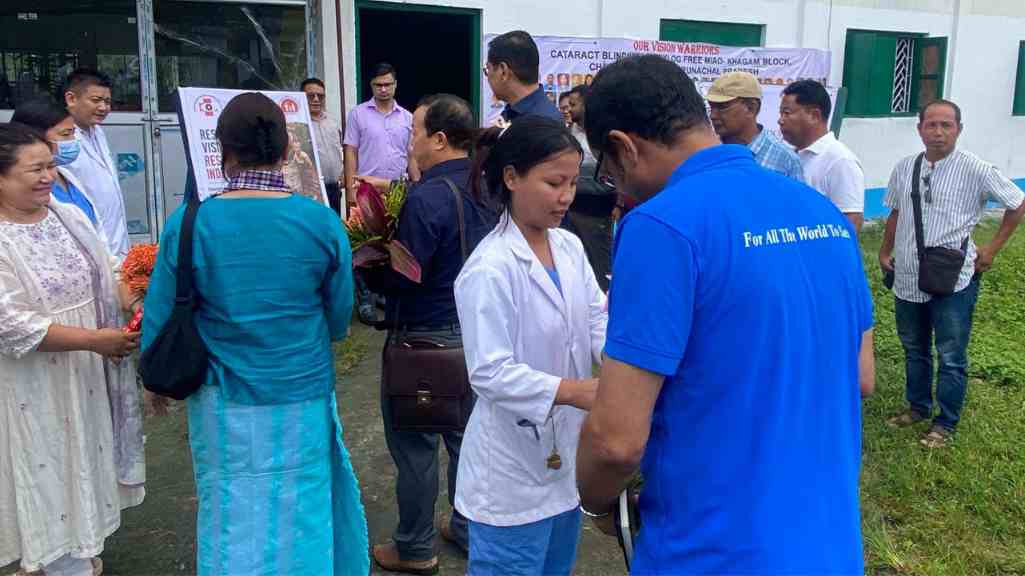
Teams travelled village by village and house by house. Behind every statistic was a conversation with a family, counselling for an elderly patient, or support for someone who believed blindness was an unavoidable part of ageing.
Achievements included:
• 76 villages covered
• 5,600+ households visited
• Nearly 26,000 people enumerated
• More than 26,700 people screened
• 283 cataract patients identified.
The Final Mile Was the Most Important
Declaring a block Cataract Blindness Backlog-Free requires far more than performing surgeries. Every identified patient must be treated, medically certified if surgery is not possible, or documented after informed refusal. Households are revisited, outcomes verified and records validated before declaration.
Strengthening Systems That Will Last
Operation Eyesight supported health system strengthening through capacity building, referral systems, operating theatre support, community mobilisation, household validation and documentation. The goal was to leave behind stronger government systems capable of sustaining quality eye care.
Why This Milestone Matters Beyond Miao
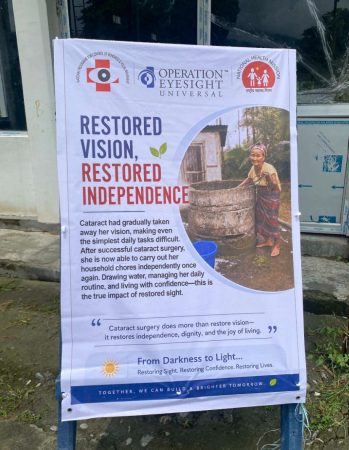
For families, it means restored independence and renewed hope. For the Government, it demonstrates the power of integrating eye care into public health systems. For Operation Eyesight, it validates the IPEC approach and provides lessons that will strengthen programmes across India and beyond.
A Milestone That Inspires the Journey Ahead
While Miao’s declaration marks a historic milestone, it is by no means the end of the journey. Instead, it serves as a powerful demonstration of what is possible when governments, communities, and technical partners work together with a shared vision.
Encouraged by the success in Miao, the Government of Arunachal Pradesh and Operation Eyesight are continuing to strengthen Integrated People-Centred Eye Care across other districts of the state. By building the capacity of primary healthcare facilities, strengthening referral pathways, supporting Vision Points, training frontline health workers, and empowering communities through awareness and early detection, the programme is laying the foundation for more blocks to achieve Cataract Blindness Backlog-Free status in the coming years.
A similar transformation is also underway in Madhya Pradesh, where Operation Eyesight is working closely with the state health system to integrate eye care into primary healthcare through its Integrated People-Centred Eye Care (IPEC) model. Across multiple districts, the programme is strengthening primary health facilities, expanding community-based screening, improving referral systems, building the capacity of healthcare providers, and ensuring that people receive timely diagnosis, treatment, and follow-up care.
Rather than focusing solely on increasing the number of surgeries, these programmes are creating resilient eye health systems capable of continuously identifying, treating, and preventing avoidable blindness within communities. This shift from episodic interventions to sustainable systems strengthening is central to Operation Eyesight’s long-term vision.
Miao has shown that eliminating avoidable blindness is not the result of a single intervention; it is the outcome of sustained partnerships, empowered communities, and resilient public health systems. As this approach continues to expand across Arunachal Pradesh, Madhya Pradesh, and beyond, Operation Eyesight remains committed to working alongside governments and communities to ensure that quality eye care reaches everyone, everywhere.
Because restoring sight changes one life.
Building stronger health systems changes the future of entire generations.