
A hospital can restore sight. A community eye health system can prevent blindness for generations. – Suhadip Bhattacharya
This is a remarkable philanthropic initiative of Ekam Foundation and Sweekriti Sociocare Foundation, established to provide high-quality eye care to people who have traditionally faced barriers to accessing treatment. Inaugurated on 21 May 2026, the event brought together partners, donors, healthcare professionals and community leaders who shared a common vision: eliminating avoidable blindness through sustainable, people-centred eye care.
A Shared Vision Beyond Infrastructure
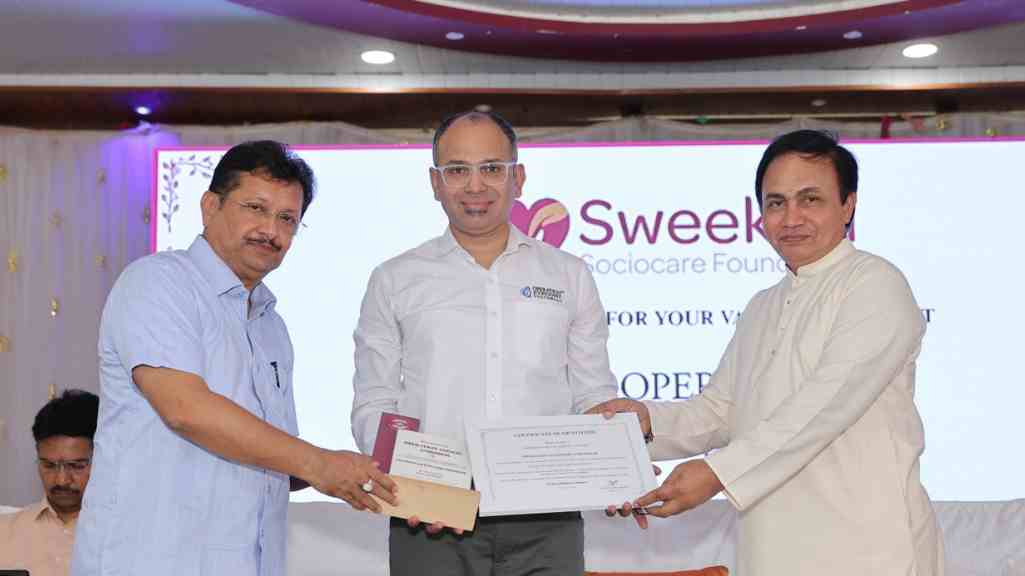
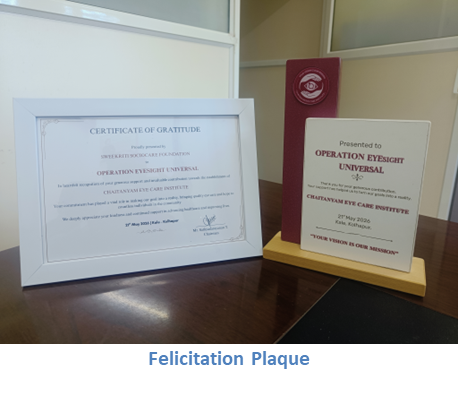
Operation Eyesight was honoured to be recognized during the inauguration for its contribution as a technical knowledge partner in shaping the hospital’s long-term vision.
Our role extends beyond supporting the establishment of a healthcare facility. By sharing our decades of experience in community eye health, along with technical guidance from our long-standing partner, L.V. Prasad Eye Institute, we are helping lay the foundation for a sustainable eye health ecosystem that reaches people where they live.
The Chaitanyam Eye Care Institute has been designed to perform approximately 4,000 free cataract surgeries every year, serving communities across Kolhapur and neighbouring districts. Equipped with modern infrastructure and advanced ophthalmic equipment made possible through generous philanthropic support, the hospital is well positioned to deliver high-quality clinical care for years to come.
Building an Eye Health Ecosystem
A modern hospital alone cannot eliminate avoidable blindness. Many people living in rural communities continue to face challenges related to awareness, affordability and accessibility. Unless these barriers are addressed, countless individuals will remain untreated despite the availability of excellent clinical services.
This is where Operation Eyesight’s proven, decades-long Community Eye Health Model becomes critical. Rather than waiting for patients to seek care, the model takes eye care into the community—proactively identifying people with vision problems, creating awareness, and connecting them to timely diagnosis and treatment. By seamlessly integrating community outreach, primary eye care through Vision Centres, and specialized hospital services, it ensures a continuous continuum of care that is accessible, equitable, and sustainable.
The model is built around three interconnected pillars:
- Community eye care: Trained community health workers engage directly with villages through door-to-door visits, awareness programmes and vision screening activities, ensuring early detection and timely referral.
- Quality Clinical Care: Patients identified through community outreach are connected to Vision Centres and, when required, referred to the base hospital for advanced diagnosis and treatment. Continuous knowledge sharing and capacity building help maintain high clinical standards.
- Sustainable Community Ownership: Lasting impact requires strong community participation and institutional support. Community-based action groups help build local ownership, promote awareness, and encourage timely care-seeking behaviour. At the same time, collaboration with government health programmes and public health departments strengthens referrals, resource convergence, and service delivery, ensuring that quality eye care remains accessible and sustainable for the communities the hospital serves.
Looking Ahead
The inauguration of Chaitanyam Eye Care Institute is not the culmination of a project, it is the beginning of a long-term partnership to strengthen community eye health across rural Maharashtra.
Together with Ekam Foundation, Sweekriti Sociocare Foundation, L.V. Prasad Eye Institute and local stakeholders, Operation Eyesight looks forward to supporting the implementation of the Community Eye Health models, creating a sustainable system that reaches underserved communities, prevents avoidable blindness and restores vision for thousands of people every year.
Because lasting impact is achieved not simply by building hospitals, but by building systems that ensure every individual has the opportunity to see a brighter future.